
Those Aren't Mountains, They're Waves
WYSIWYG: What You See Is What You Get. Or, as @angelman@pixelfed.de, a clever photographer on the Fediverse, rephrased it: WISIWYG, What I See Is What You Get! But what do you actually see? And what do I see that I can share with you?
Our senses can be surprisingly deceptive. Everything we see, hear, smell, and feel is shaped by our own perception. What we experience is not necessarily the world exactly as it is. But perhaps "deceptive" is too strong a word. Our senses simply create a version of reality that makes sense to us. They do this so effortlessly that we rarely stop to think about it.
Is this where consciousness already happens? Where does this all come from? Where do we come from? Where does the „we“ start? What do we know? What do we really know for sure? In some ways, this reminds me of today's AI systems, which can give the impression of understanding, even when we are not sure what lies behind it.
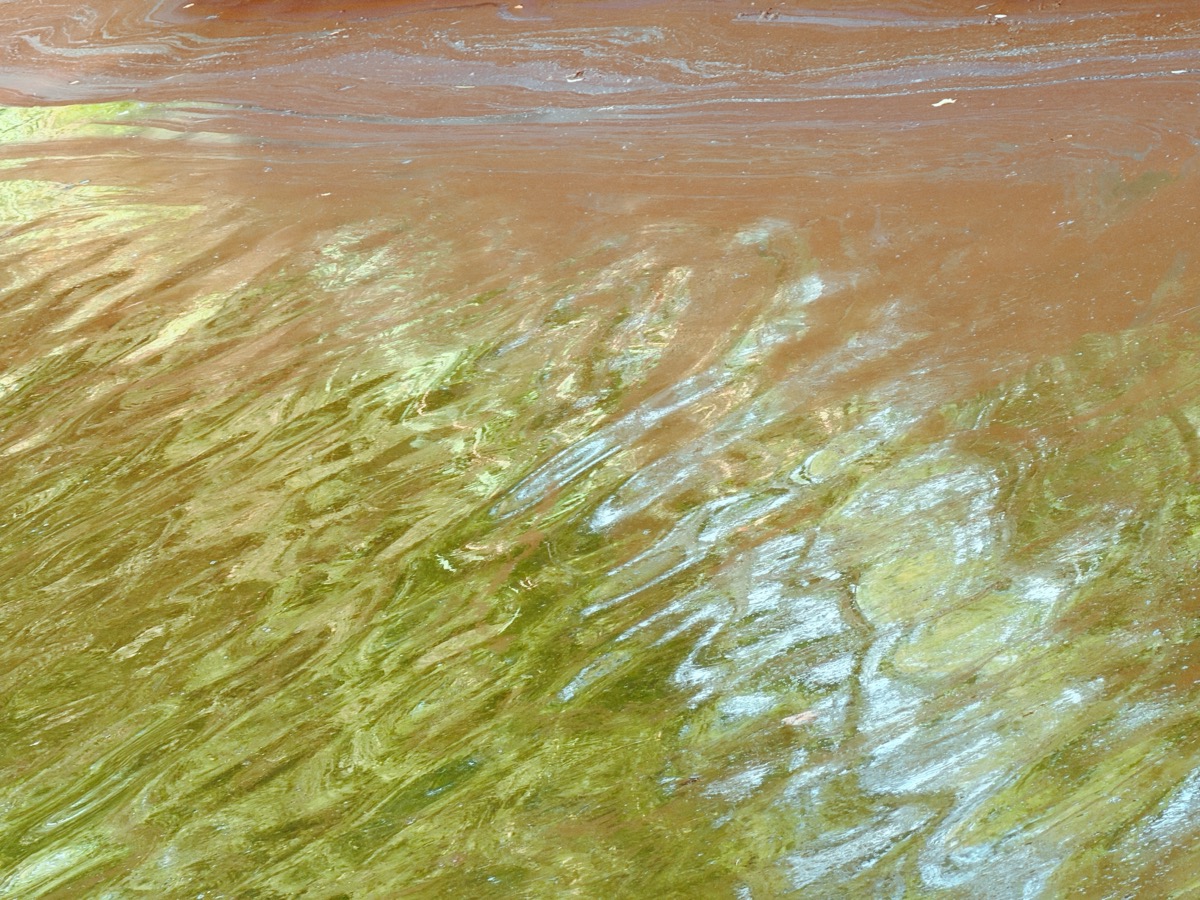 1/121 s, f/2.8 , ISO 50, 200 mm, iPhone 17 Pro Max
Our senses constantly interpret the world around us. They select, filter, and organize information, often without our awareness. Seeing feels effortless. Sounds reach us whether we are paying attention or not. A familiar scent can catch us by surprise. These experiences are so ordinary that we rarely question them.
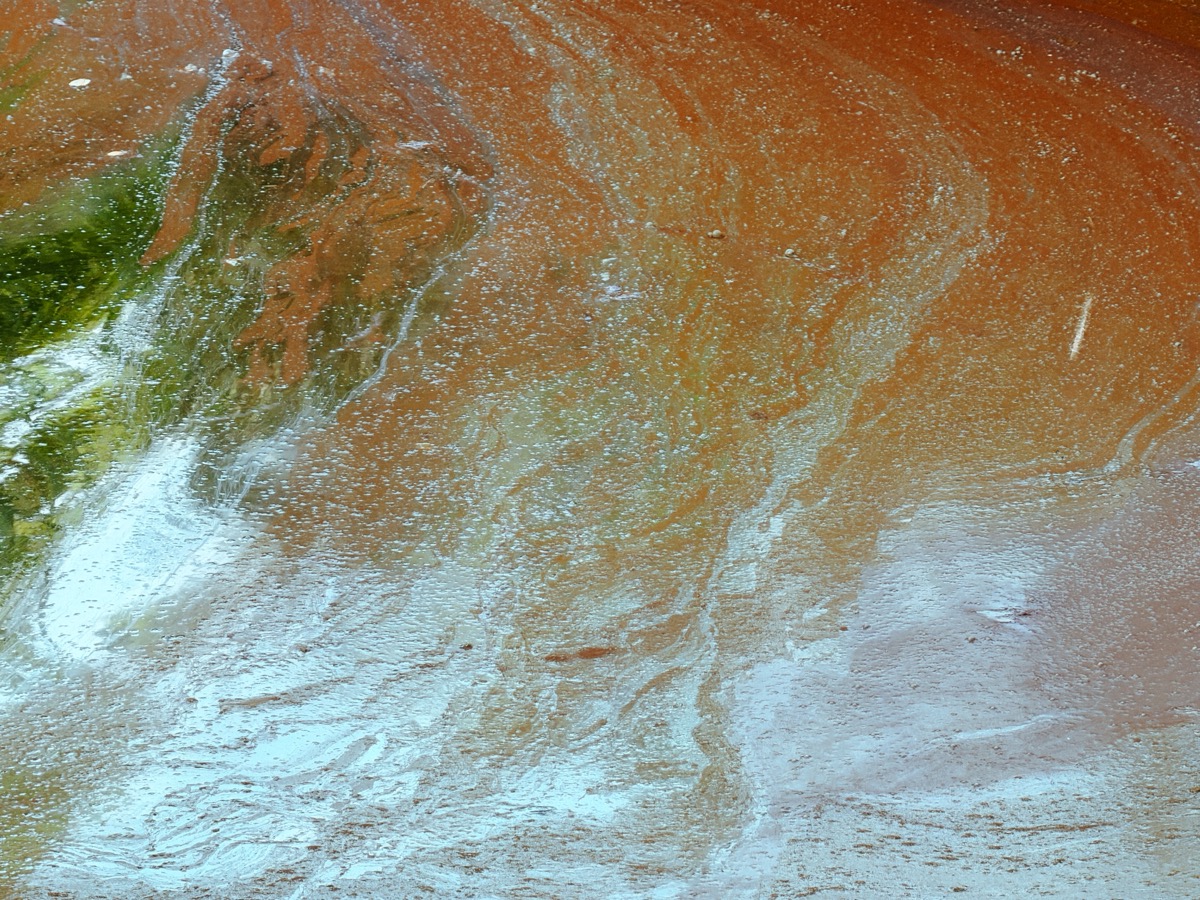 1/121 s, f/2.8 , ISO 50, 200 mm, iPhone 17 Pro Max
Luckily, my hearing is still good, my two slowly aging eyes are doing their job, and my sense of smell has not let me down yet. So what happens when an artist begins questioning the way we perceive the world?
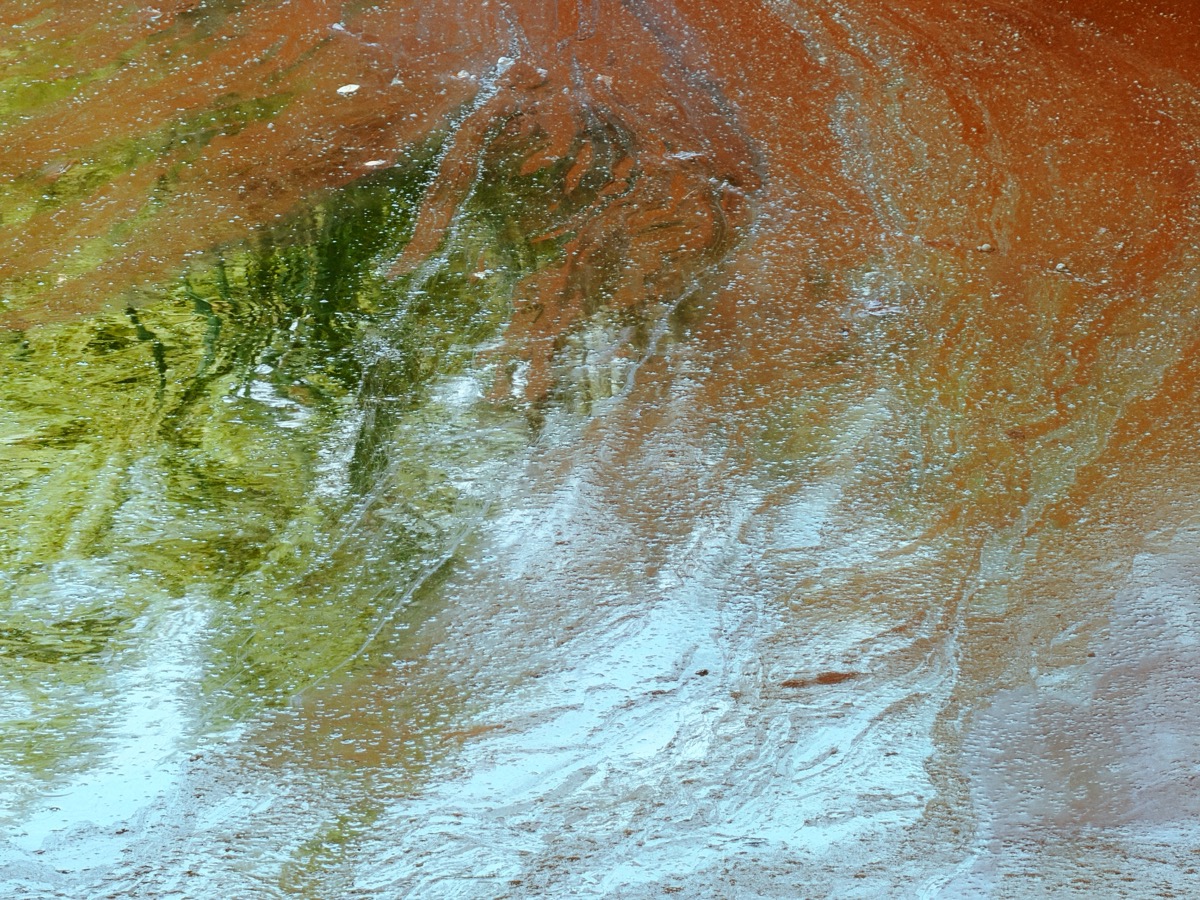 1/121 s, f/2.8 , ISO 40, 200 mm, iPhone 17 Pro Max
As a photographer, I have come to realize that part of my work is exploring the many ways we see the world. Sometimes that means experimenting with familiar subjects, challenging my vision, or discovering unexpected ways of looking at ordinary things.
For me, reflections and refractions have become an ongoing fascination. Light behaves differently when it encounters glass, mirrors, water, or clouds. It can bend, reflect, or scatter, changing what we see in unexpected ways.
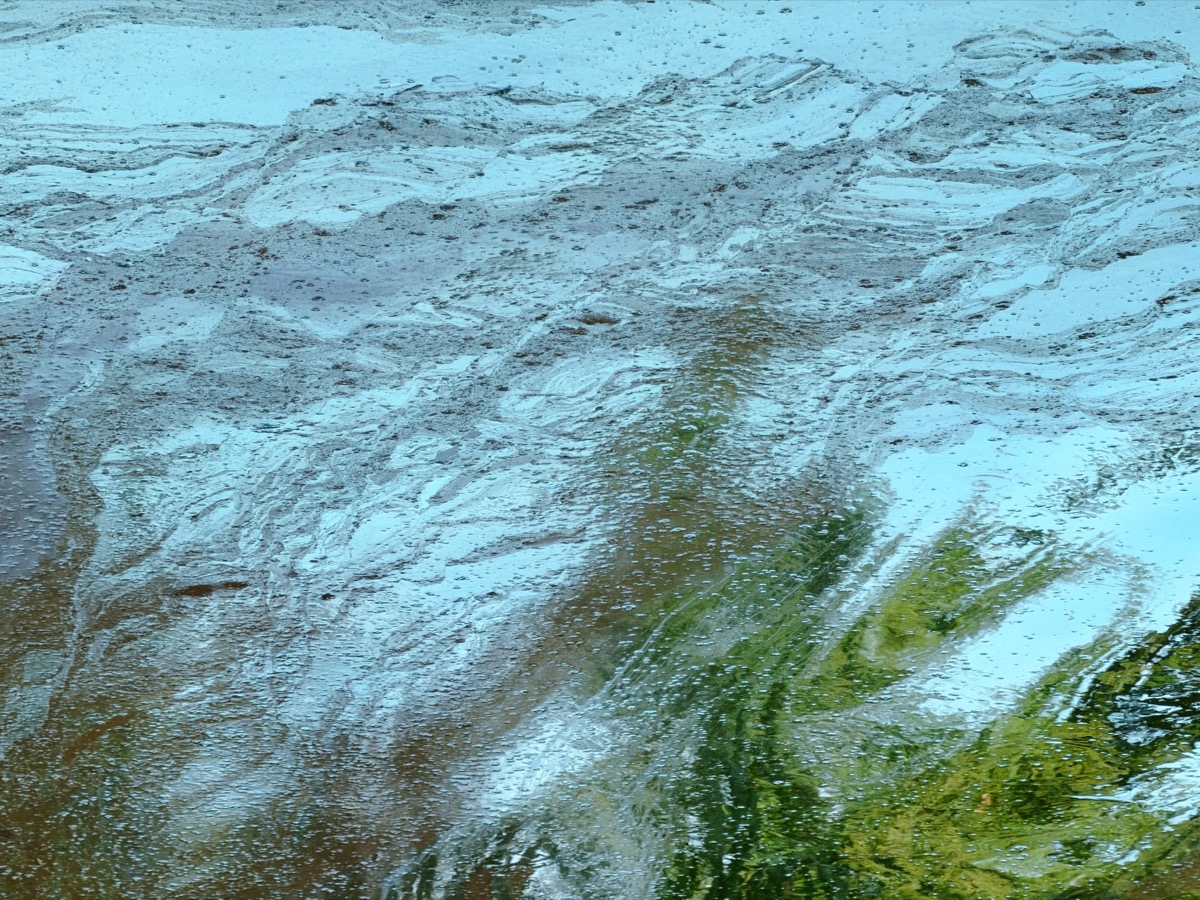 1/185 s, f/2.8 , ISO 40, 200 mm, iPhone 17 Pro Max
In this short series, titled "Those Aren't Mountains, They're Waves," I explore the surface of a small pond. At first glance, this little pond is nothing special. It seems ordinary, forgotten, and perhaps to small to even notice.
But take a closer look. Notice the ripples, the changing light, the movement of the wind, the blue sky reflected in the water, and the tiny details along its edges. Suddenly, an ordinary pond becomes something entirely different. It offers us another way of seeing.
Water, a few ripples, a blue sky, some colorful dust. Is that really the whole story? Yes, I think that is my story for today. Something simple, colorful, and beautiful. And perhaps that is enough. And who knows where that beauty comes from? All I know is that I can see it, both with my own eyes and through my lens. And hopefully, now you can see it, too.
Enjoy.
Thank you
Steven @stevenlawsonphotography@mastoart.social continues to amaze me with his exploration of what water can do to light. His inspiring work helped me get back in the saddle and start posting again.
G @gxg@mstdn.social kindly helped me find the quote, "Those Aren't Mountains, They're Waves," which comes from the 2014 movie Interstellar, directed by Christopher Nolan. Not to mention the countless edits she did for this post which made the whole piece much more readable and enjoyable.
And to everyone else, thank you for your patience during my long summer absence. I simply was not able to keep my social media accounts and website updated. I am catching up now and look forward to reconnecting with you all.